
Knut Hamsun's childhood home
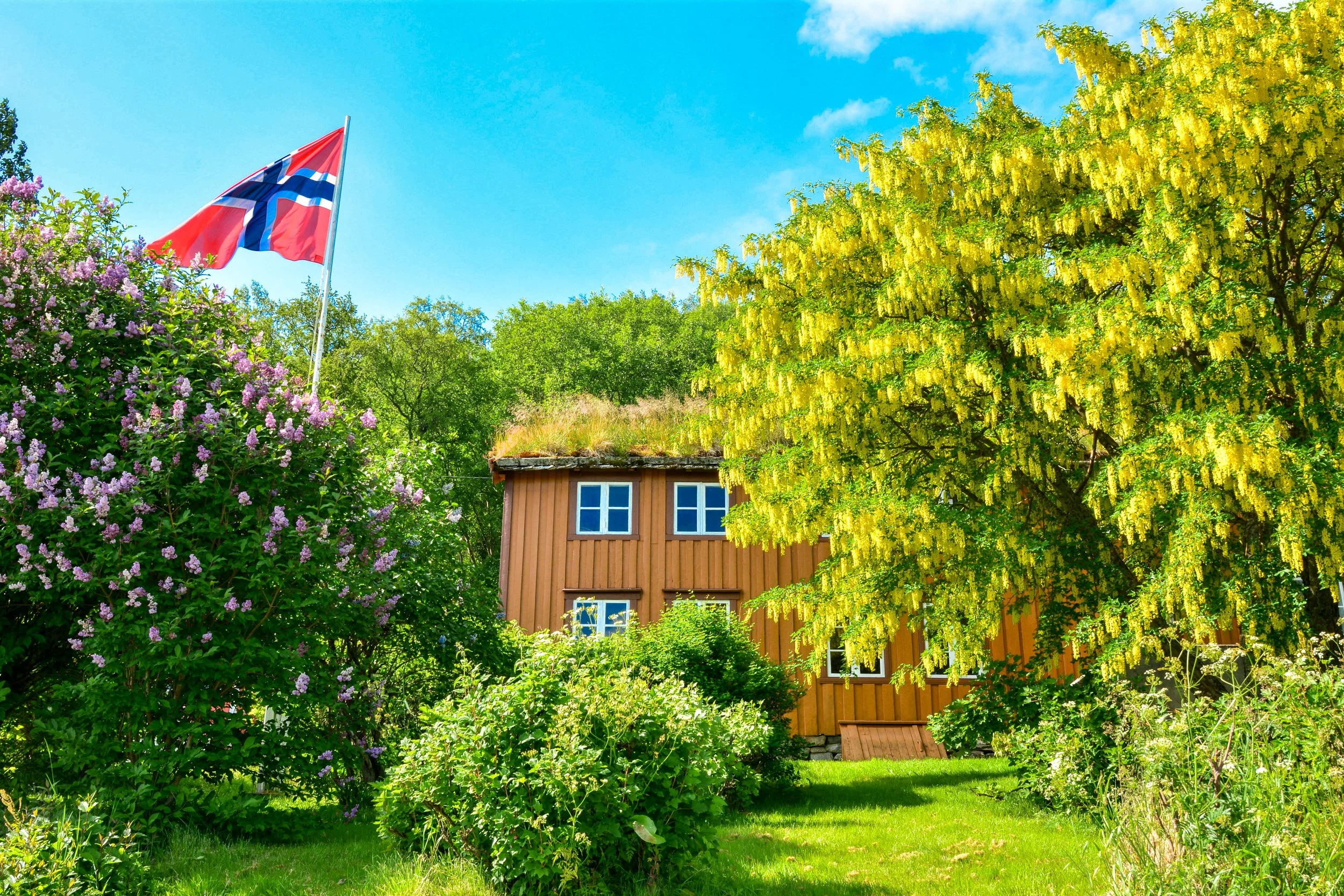
Under the great peaks on the farm Hamsund in Hamarøy Tours are offered during the summer season. Over a cup of coffee in the living room, you will be given a vivid insight into Knut Hamsun's childhood and upbringing.
At the childhood home you will be greeted by a guide who will invite you to join in a story-telling session over a cup of coffee and give you a tour of the house. Here you will hear about Hamsun's journey from his birthplace in Gudbrandsdalen, about his upbringing in Hamarøy and teenage life in Nordland, until he took the step out into the world at the age of nineteen to become a writer.
The story we tell is about Hamsun's journey from his birthplace in Gudbrandsdalen, to his upbringing in Hamarøy and teenage life in Nordland, until at the age of nineteen he took the step into the world to become a writer.
Pictures on this page: Karoline OA Pettersen
Address: Buvågveien 14, 8294 Hamarøy
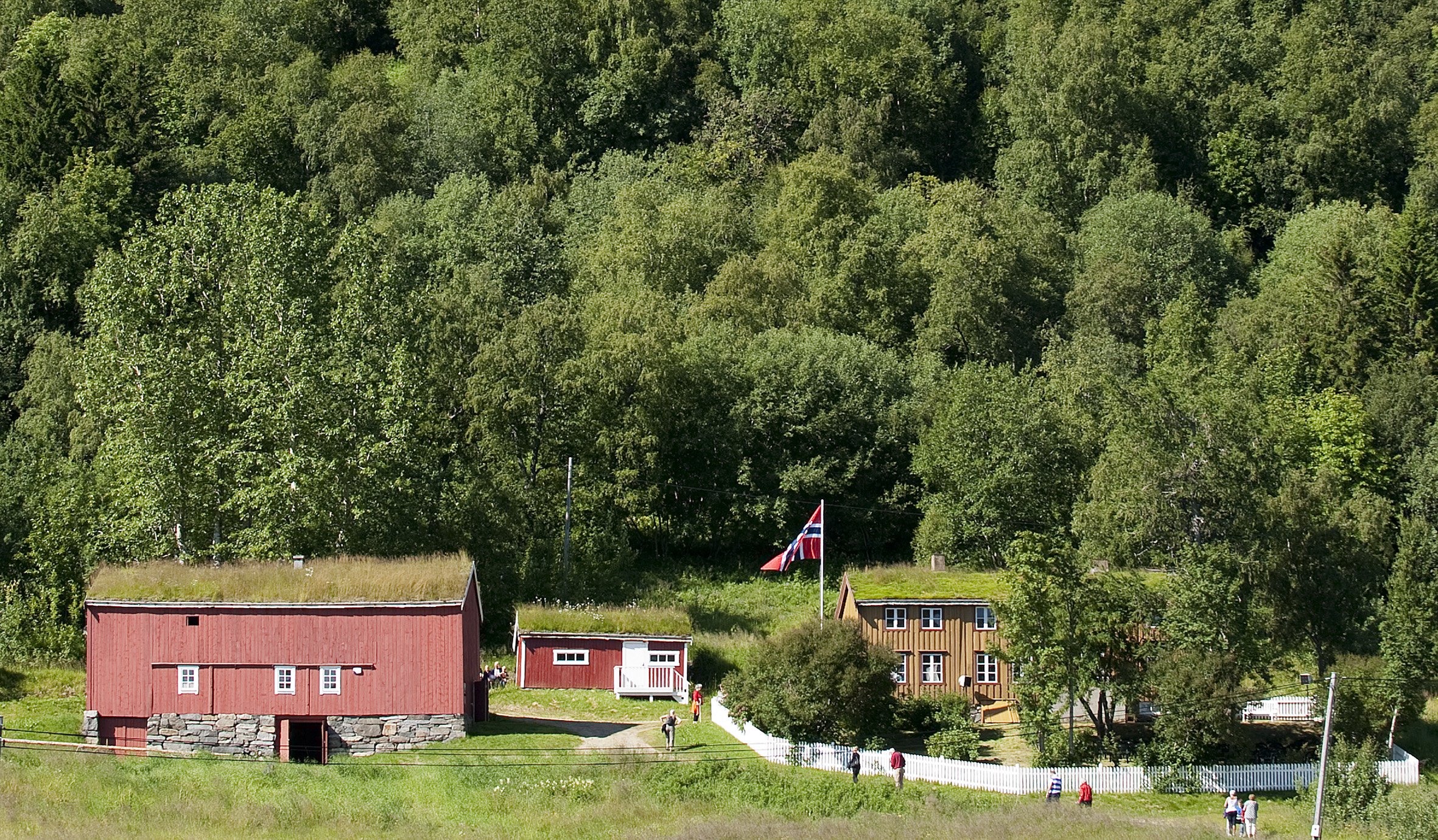
The Barndomshjemmet is located in Hamsund, 5 kilometers from the Hamsun Center. When you arrive in Hamsund, turn off at the signs for "Knut Hamsun". Parking is available at the first exit on the left. From there, it is a short walk up to the Barndomshjemmet.
Opening hours and ticket prices
Opening hours summer season 2026:
The orphanage is open to visitors during the period 1. July – 9 August, every day at 11:00 – 15:00.
The facility has fixed opening hours during the summer season. Outside of season, the facility can be visited by groups upon request.
Ticket prices
You can buy an entrance ticket when you arrive at the Childhood Home. We also offer a joint ticket to the Hamsun Center and Knut Hamsun's Childhood Home.
Regular admission: adult 90 NOK, senior/student 70 NOK
Children under 18 have free regular admission.
Group entry (min. 10 paying): NOK 70 per person
Special prices apply for visits outside of regular opening hours.
Knut Hamsun's Childhood Home + Hamsun Center (summer season 2026)
Adult: NOK 200 Student/Honours NOK 160, Groups (10+) per person: NOK 160
Booking
If you would like to book a tour of Knut Hamsun's childhood home, please contact us well in advance. Fill out the form by clicking the button below for a booking request and practical clarifications.
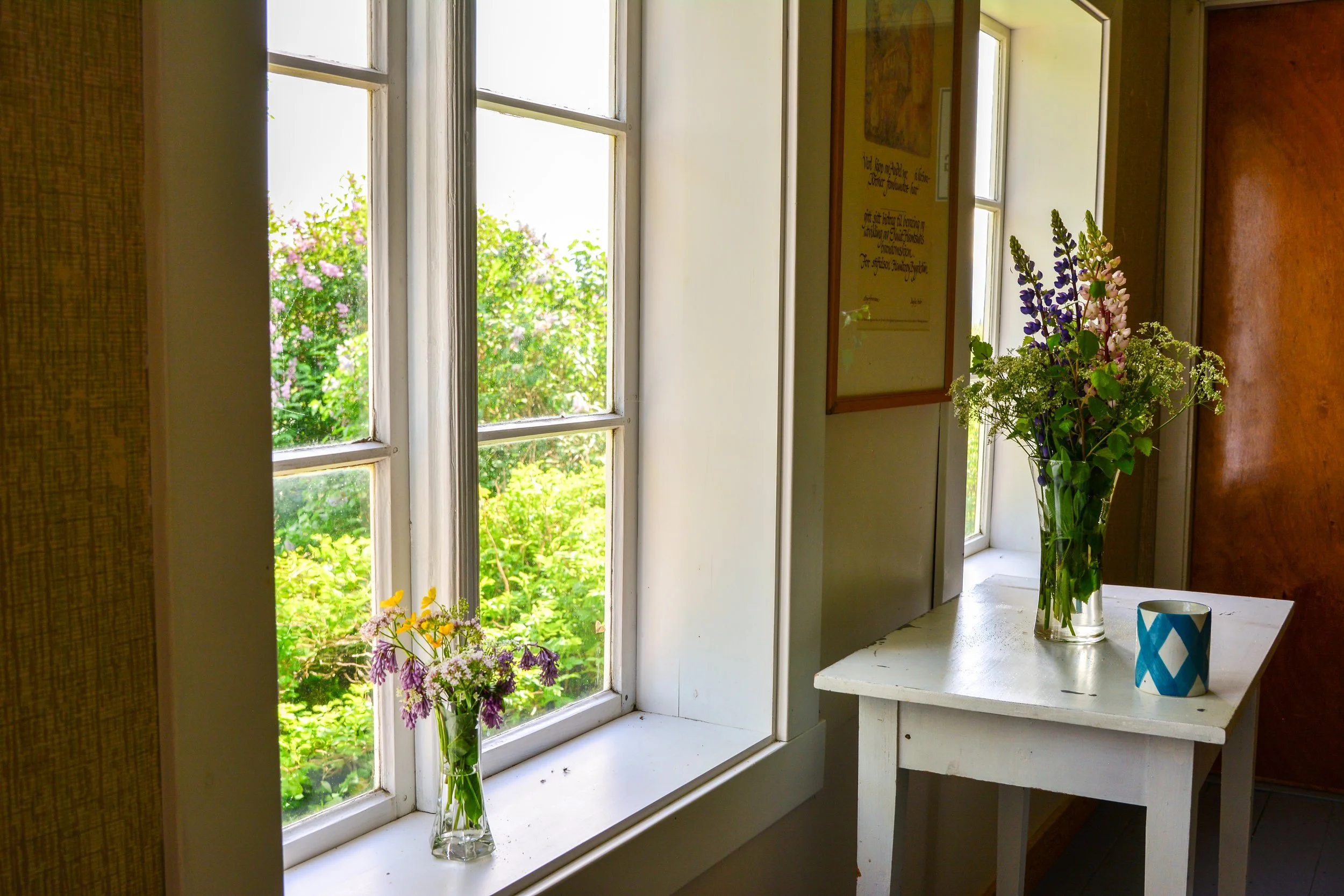
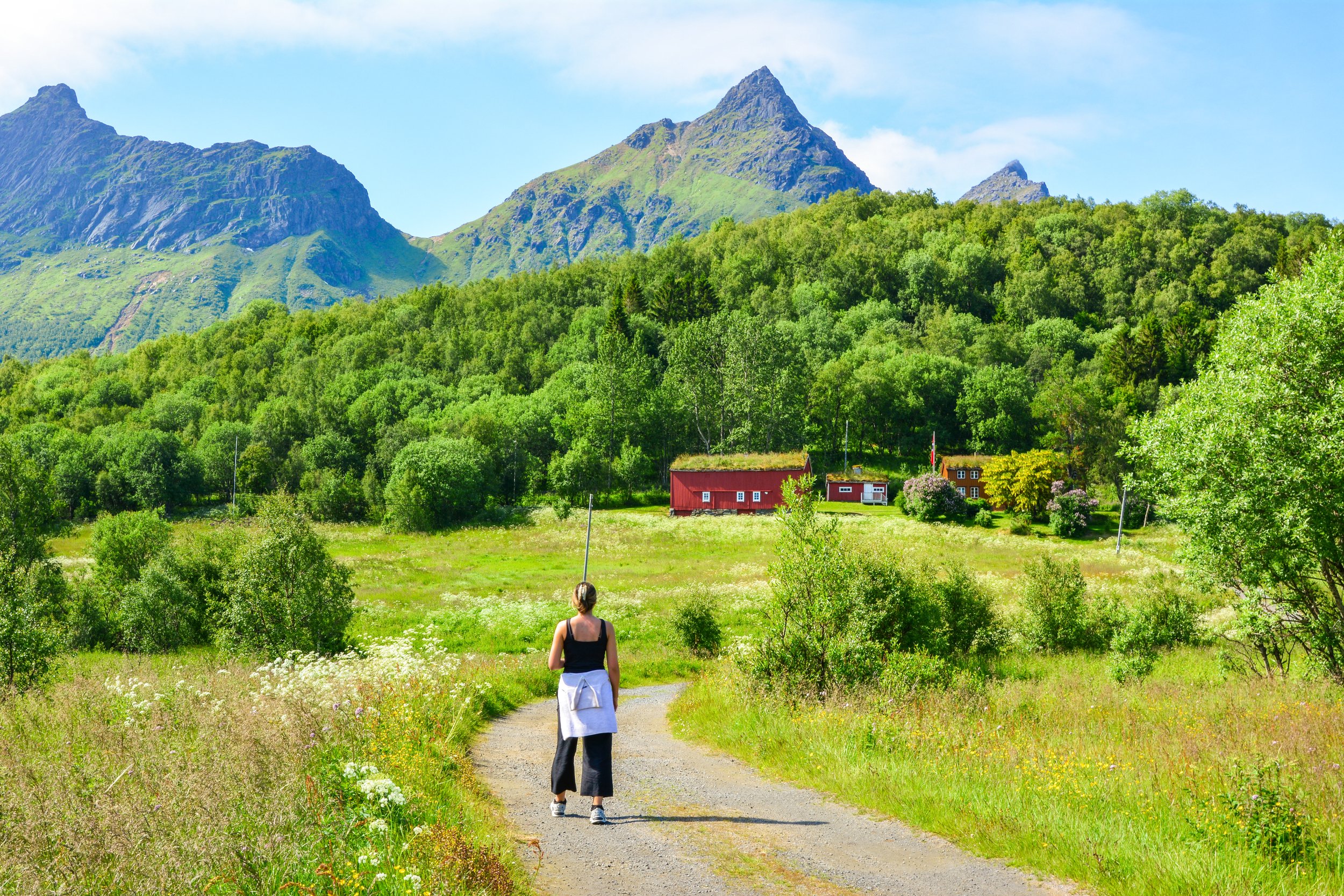
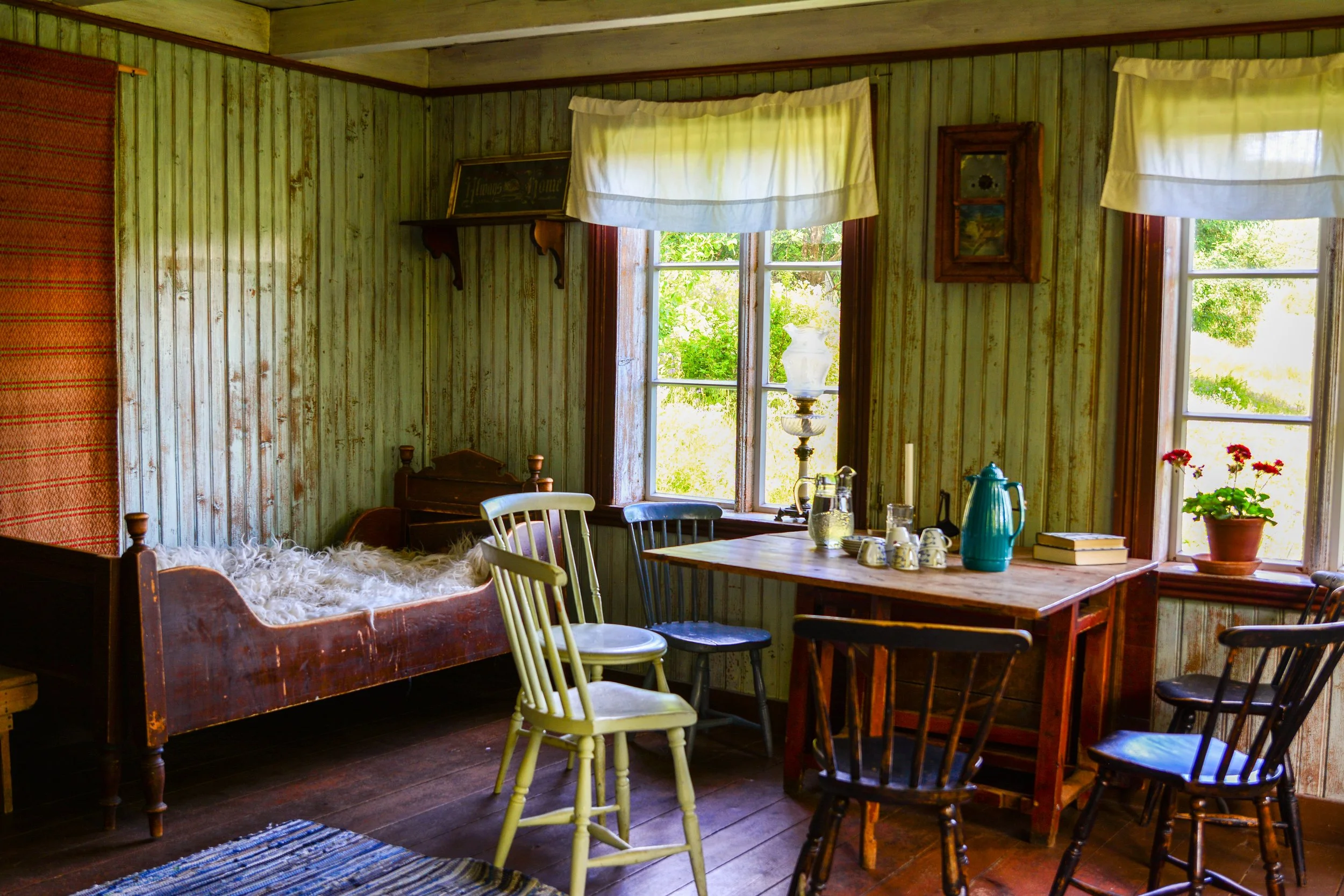
A visit to Hamsun's childhood home is an authentic experience of the author's childhood universe. Up the narrow staircase we find the old boy's room and Knut's peg with the letter "K" carved into it. In his mother Tora's room we get a closer look at her life. His mother suffered from a nervous illness and her condition was one of the reasons why Knut, at the age of 11, was sent away to live with his uncle Hans at Presteid.
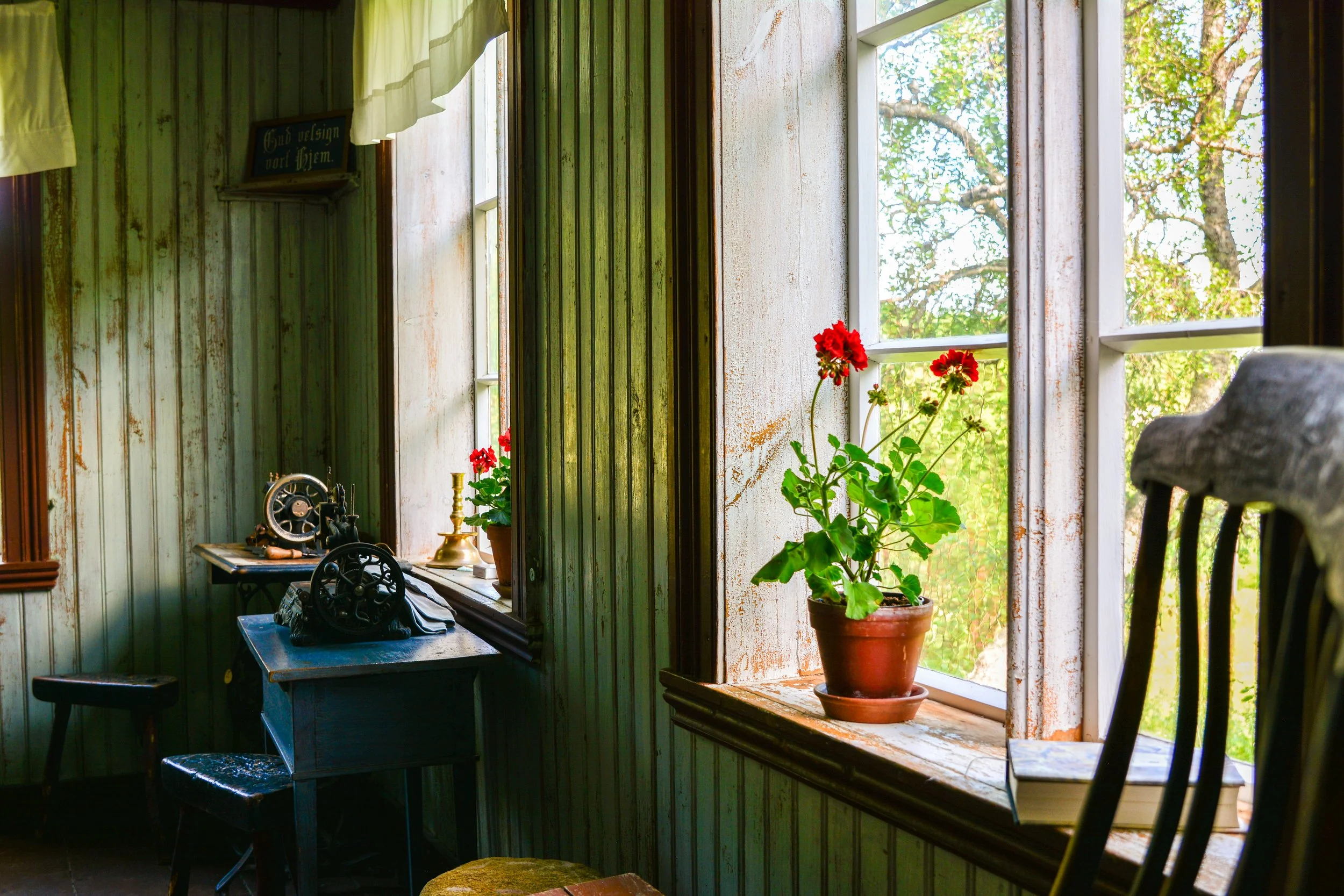
In the living room where Father Peder's sewing machine still stands in the corner, the guests gather around the table for a coffee chat with stories from Knut Pedersen's childhood on the farm in Hamsund. The young boy who later traveled the world and took the name Knut Hamsun.
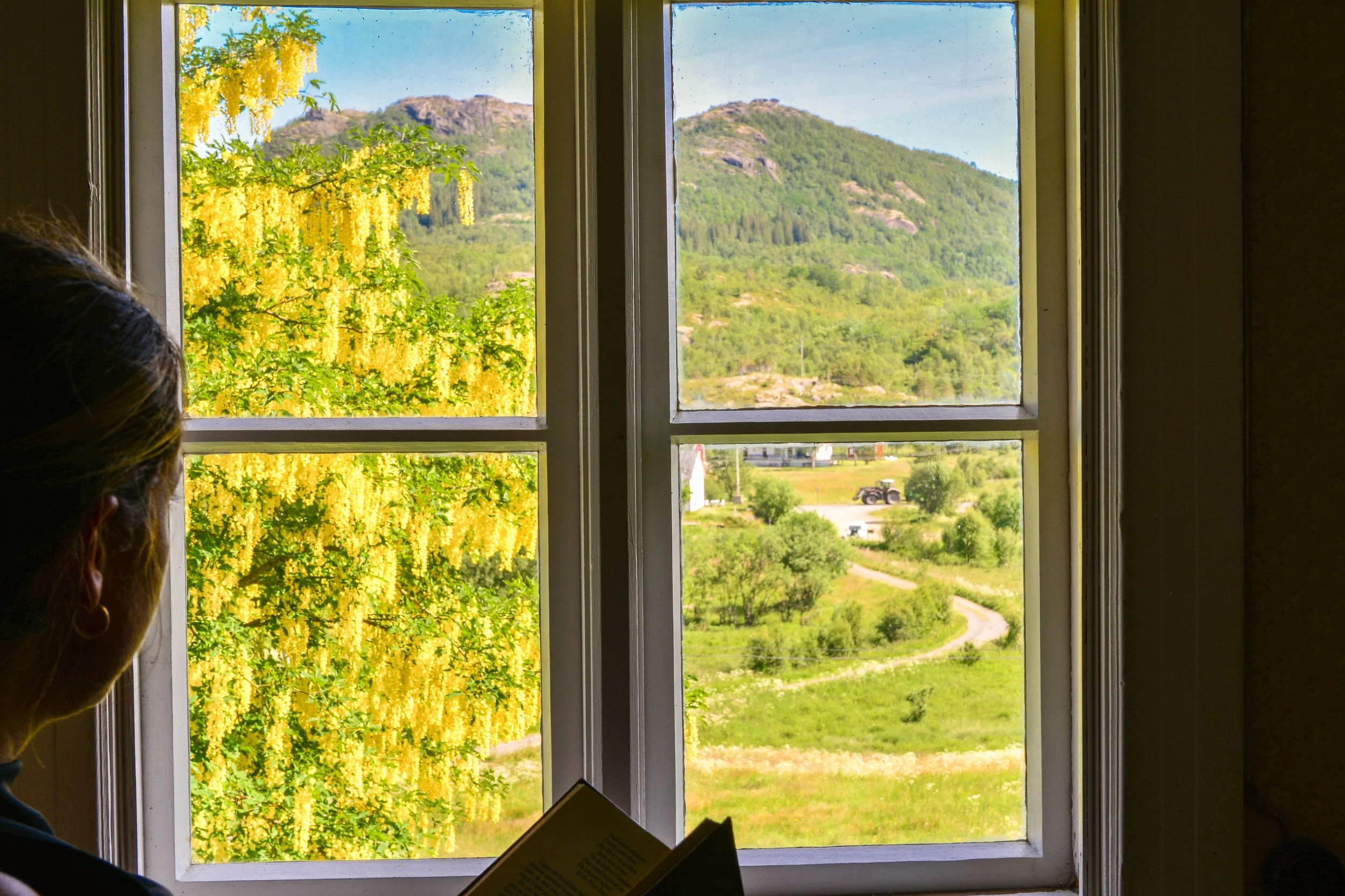
Through the tour you will become better acquainted with the environment and landscape of Knut Hamsun's childhood, and to which he often returned in his works and memoirs.
The visit is well-suited for families with children. The whole family can play in the carpentry workshop or in the craft loft where they can make letters and hang up their favorite words.
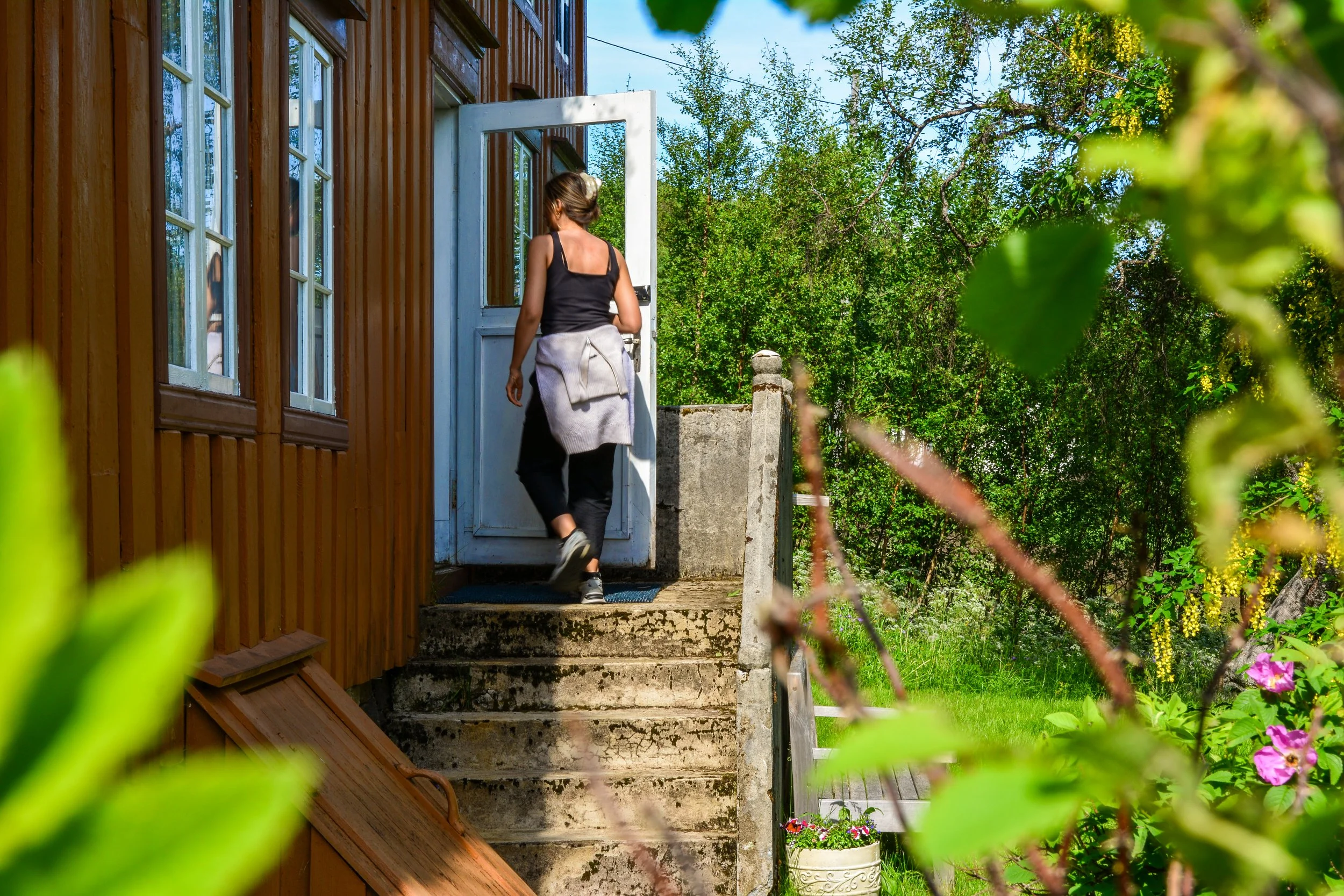
The summer Knut turned 3, the Pedersen family moved from Gudbrandsdalen to Hamarøy .
Every year on August 4, Hamsun's birthday, the Hamsun Center marks the day in the childhood home in Hamsund. This year, acting director Alvhild Dvergsdal gave the speech for the day, which was about Hamsun's relationship with his upbringing in Hamarøy .
What was Knut Hamsun's relationship to his home and the house in Hamsund where he lived from the age of 2 to 19? There are two main perspectives, firstly: Nordland and Hamarøy was a foreign place for Knud and the Pedersen family. They were farmers from Lom who had to break up from the family farm and move north when Hamsun was in his third year.
My home was entirely Gudbrandsdalen. We children learned the Saltværing dialect to perfection, but at home we never spoke anything but Gudbrandsdalen, it was our mother tongue. ("Jeg og Gudbrandsdalen," 1917).
In addition, Knud was sent away from home for periods as a boy, to live with his uncle Hans at Presteid, a stay that darkened the life of young Knud. Therefore, at the age of 19, he had to travel south to modern areas, to realize himself as a writer and find his voice. While he lives and runs the farm Skogheim at Oppeid in Hamarøy , he writes:
They have made me a Nordlander. I don't mind that, that's a good thing too. But I was neither born, baptized, confirmed nor married in Nordland. But I was in Nordland for many years in my childhood and now again for six years as an aging man. "I and Gudbrandsdalen," 1917).
But from the 20th century, another story about Hamsun's upbringing in the north emerged in the 50-60-year-old Hamsun. It is common to link it to the Caucasus journey and the national struggle against the dissolution of the union in 1905. He became more concerned with the values associated with pre-modern culture – and in his view, Northern Norway was still not very modernized. Memories from a pre-modern childhood and upbringing, nature, culture and social life are depicted by Hamsun as adventurous and distinctive, not without dark sides, just as fairy tales also have their trolls. And modern development is put in a critical light. This becomes the subject of a number of his books in the latter part of his writing career. It is precisely his upbringing in the north that now becomes part of a poetic identity for Hamsun himself and readers with a critical distance from modern life. In the preface to a German translation of Det Vilde Chor (1904) he writes:
I try to get far away from people and from all memories of modern life, I reserve myself for the days of my childhood, when I went and herded the creatures at home. It was then, my sense of nature was awakened _– if I have any then – I lived at least from a small child on grasslands, in the forest and in the mountains, and I met all the animals and all the birds, who then became my good friends for the rest of my life.
Coastal culture and the sea are emphasized as part of the landscape of childhood:
The sea is also part of the natural surroundings that I have grown up with since my fourth year. My home was by the Vestfjorden, which opens wide straight out to the Atlantic Ocean.
And therefore, writes Hamsun,
When I many times read depictions of nature in modern novels, it only fills me with reluctance, and I soon realize that this is only an acquired knowledge of nature and has nothing to do with a heartfelt and sacred sympathy with the forest and the vastness. (Letter to Heinrich Goebel, 1908).