
Nordlandsmuseet to international research conference
From 8 to 12 June, Head of Department Marija Griniuk, Head of Communication Magnus Sivertsen Sørvig and Museum Director Barbro Laxaa presented a research paper at the Design Research Society conference (DRS 2026) in Edinburgh. DRS is an international organisation that promotes research in education, art and practice, and the conference brings together academics, practitioners and researchers from all over the world.
The article describes how Løp The farm uses food, historical recipes and live role-playing to make local history more accessible and meaningful to the public. It shows how authentic food experiences, historical settings and communication can bring cultural heritage to life and create powerful experiences for visitors.
Food as communication
The article is about Løp Farm and examines how historical food traditions can be communicated through place-based experiences. Griniuk and Laxaa argue that designed experiences can help recreate historical food traditions in an effective way, because the audience is present where the dishes are made and served.
On Løp Farm, this means that the audience doesn't just hear about the past, but experiences it. Presenters in period costumes serve food made from recipes from old cookbooks and notes, in the same rooms where former residents once received guests. The smell of freshly baked lemon cake, the china on ornate tables and the stories told along the way are all part of the same experience.
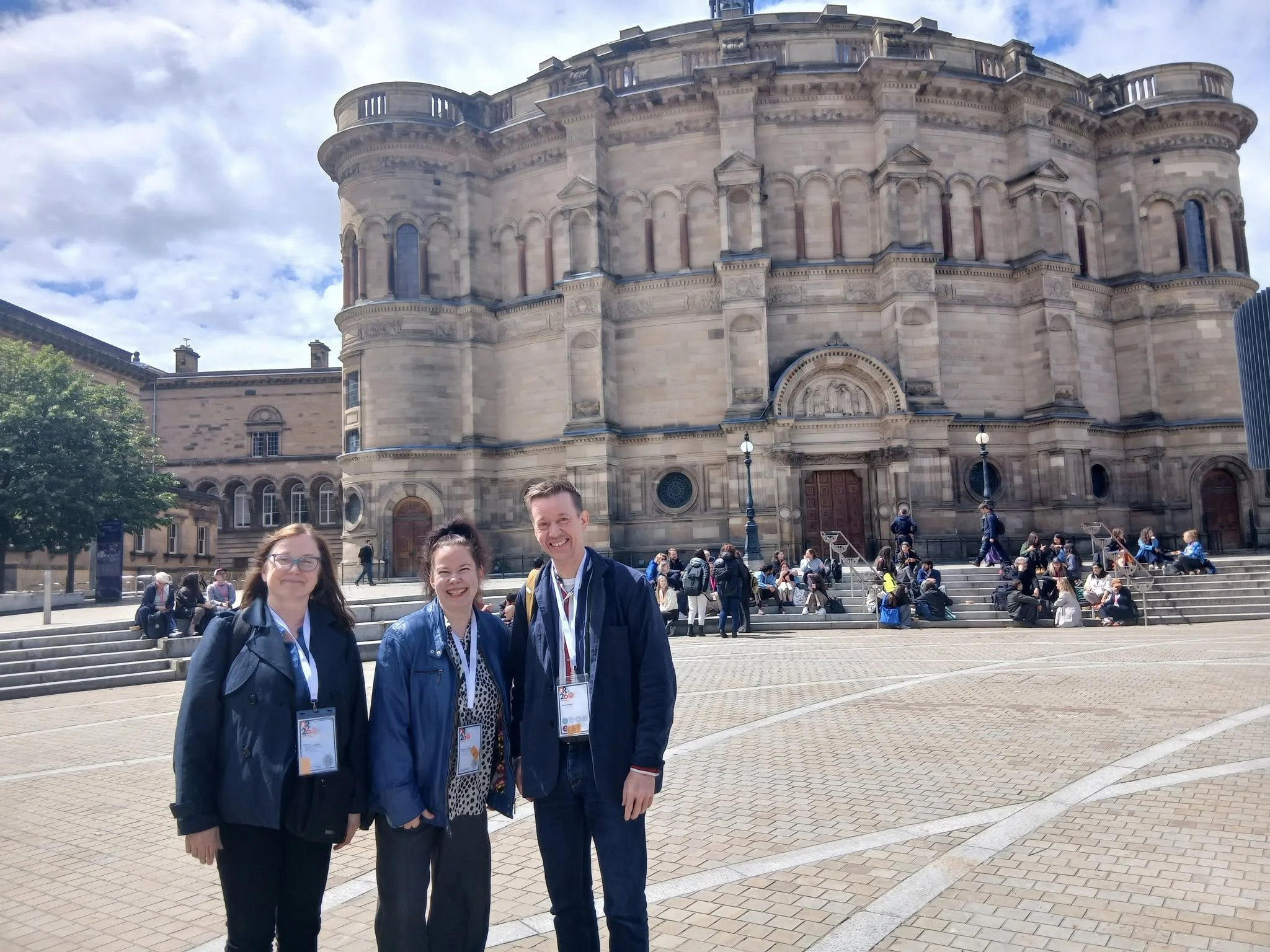
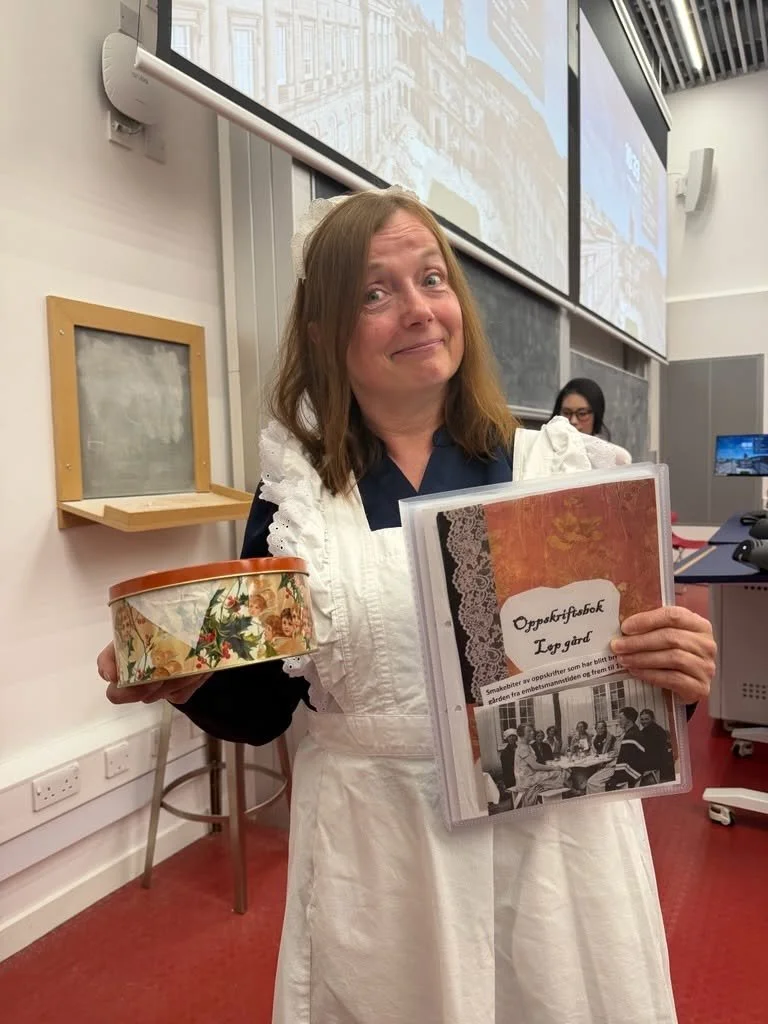
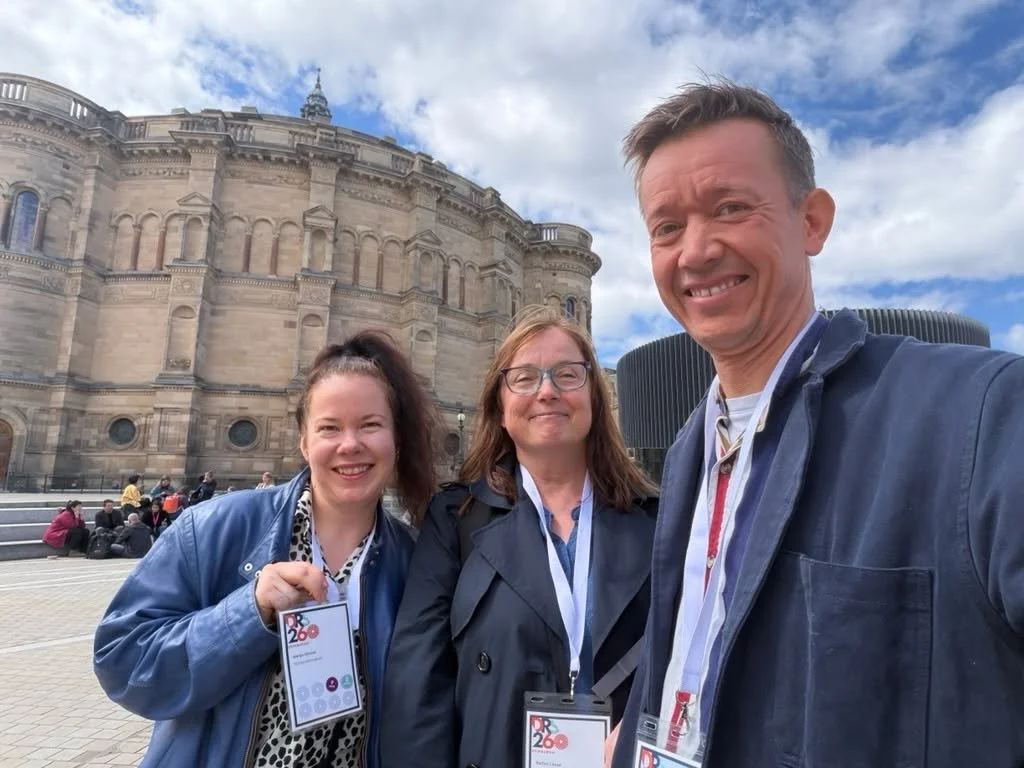
Department head Marija Griniuk, subject manager for communication Magnus Sivertsen Sørvig and museum director Barbro Laxaa at the Design Research Society conference (DRS 2026) in Edinburgh. With lemon biscuits and costumes in their suitcases, they showed the participants a taste of what Løp The farm has to offer:
Løp Farm and the Krogh-Hansen sisters
Løp The farm is located about 15 km outside Bodø and the place has been inhabited since the Iron Age. From the mid-16th century to the mid-17th century, dinghy skippers lived on the farm. The dinghys sailed with stockfish to Bergen and returned with grain, salt, sugar, and spices. During the civil service era 1651-1828, the dinghys brought exotic raw materials from Europe to the farm.
The modern history of Løp is particularly associated with the sisters Hanna and Arnolda Krogh-Hansen, known as "The Misses of Løp ". They were well-educated and well-traveled, but also practical and hard-working. They carried on the traditions of food, crafts and hospitality and created a distinctive culture in their home. On special occasions, their dinners were served on tables covered with white tablecloths, china, silver and crystal. Their famous lemon cake is still made according to the same recipe, much to the delight of visitors during the summer season.
In 1816, the Swedish ornithologist Sven Nilsson visited the farm and in his diary notes we can read how he was received by county administrator Johan Ernst Berg and his wife Sara Schytte Berg. "On arrival, we were warmly received by Mr. Amtmannen. A splendid table was laid, and when the whole company came forward, we sat down around it. Varden suggested scales; at the end of the meal, everyone joined in Norway's ålskade national song: "For Norway, Heltes Fode land", etc. At the last verse, everyone stood up and gave a three-fold delightful cheer at the end of the song. The glass was emptied and people left the table. Fun and conversation continued. Mrs J., a young talented lady, sat down at the piano and sang some beautiful Norwegian folk songs. Toward evening, punch was served and two violins were played, after which the dancing began. Polska seems to be a national dance, although waltz and anglas are also danced. All were happy and the young, beautiful girls maybe the most.”
He tells Sven Nilsson that a magnificent table was set, that they toasted, sang, and had punch and that they danced well into the evening. The diary entries are one of many sources that show what role Løp The farm served as the social and cultural center of Salten.


A growing book project
The article is closely linked to a book project that Barbro Laxaa has been working on for several years. The book is a tribute to Løp Farm food traditions from 1816 to 1970, and is based on handwritten recipes and cookbooks found on the farm. Old wallpaper, flowers from the garden and interior from the house are used as visual elements.
The book is divided into different dishes, from cakes and pastries to bread, porridge, soups, feasts and pickles. It includes, among other things, the famous lemon cake of the last residents, Hanna and Arnolda, møsbrømlefse, currant juice and menus from historical banquets, including a meal for King Harald V in 1998. All the recipes are adapted for a modern kitchen.
The idea is that the book will not only be an archive, but also a practical tool and an experience. It forms the basis for many of the events on the farm, such as Afternoon Tea, historical banquets and sensory events where the public picks berries in the garden and makes juice according to old recipes.
