
The Farmstead of Kjelvik

Where time has stood still
Right next to the busy E6 in Sørfold municipality , you can step into the past. When you drive off at the rest area, a small path will lead you to Kjelvik, a small homestead with roots dating back to the 18th century.
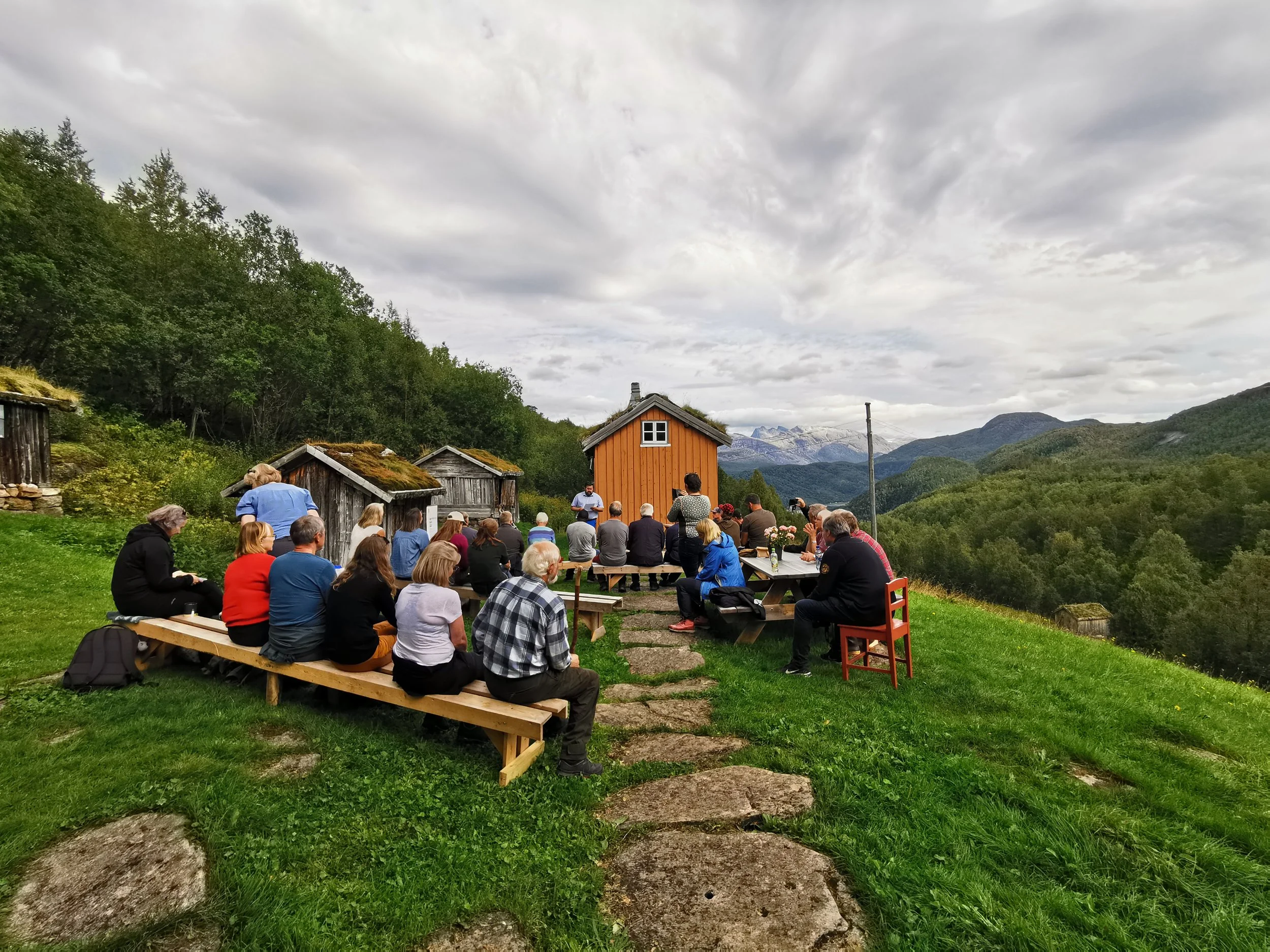
The little one Crofter's Farm consists of several small houses. The mountains and the fantastic view of Leirfjorden are the only backdrops. Kjelvik is today a protected Sami cultural monument and tells an important story about the Norwegian/Swedish Sami history in the 19th century and the Norwegianization that followed.
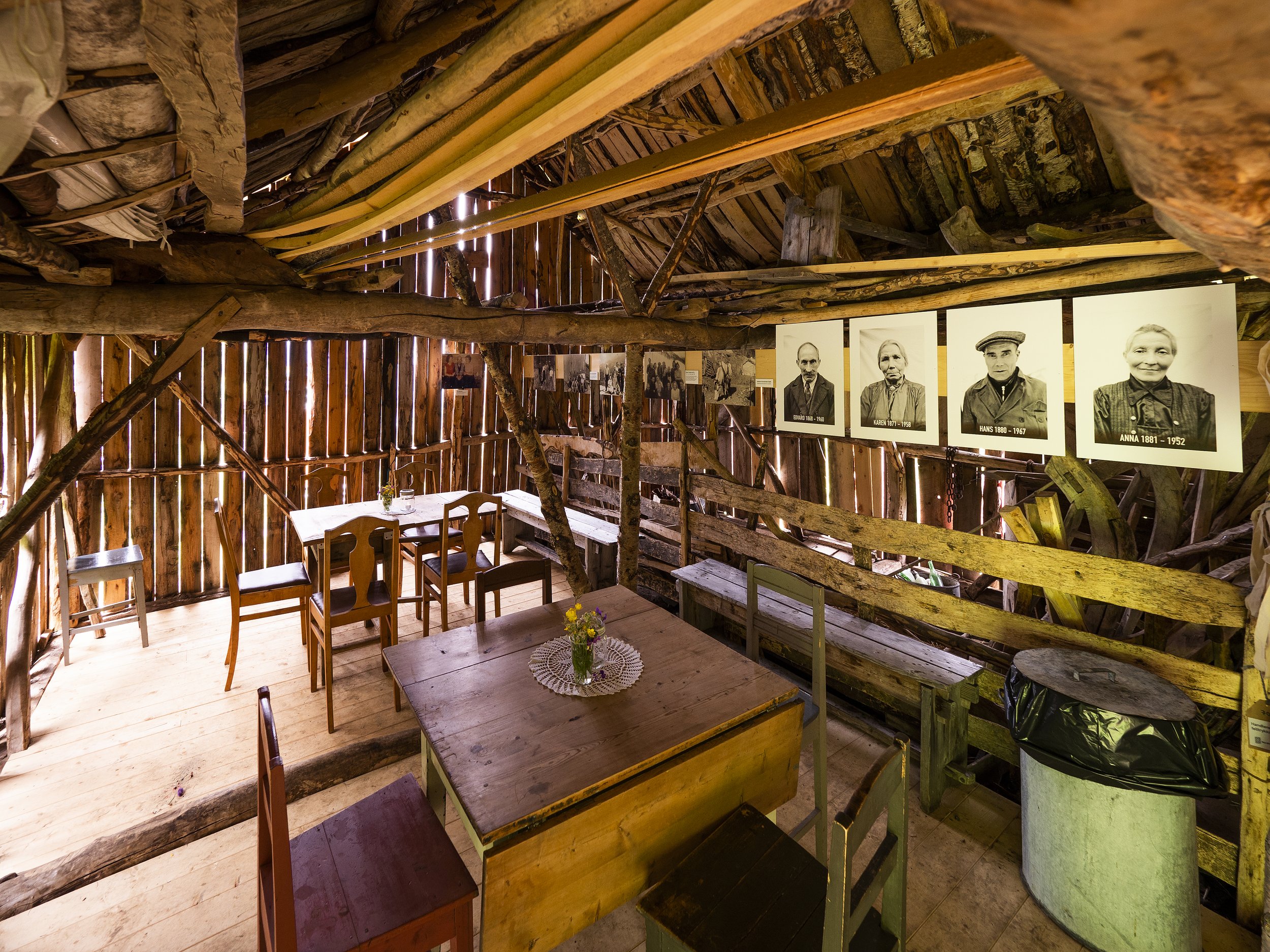
The last people to live in Kjelvika were four unmarried siblings, Edvard, Karen, Hans and Anna, who lived here and ran the farm together. They ran the farm with four cows, some sheep, a couple of goats and a horse.
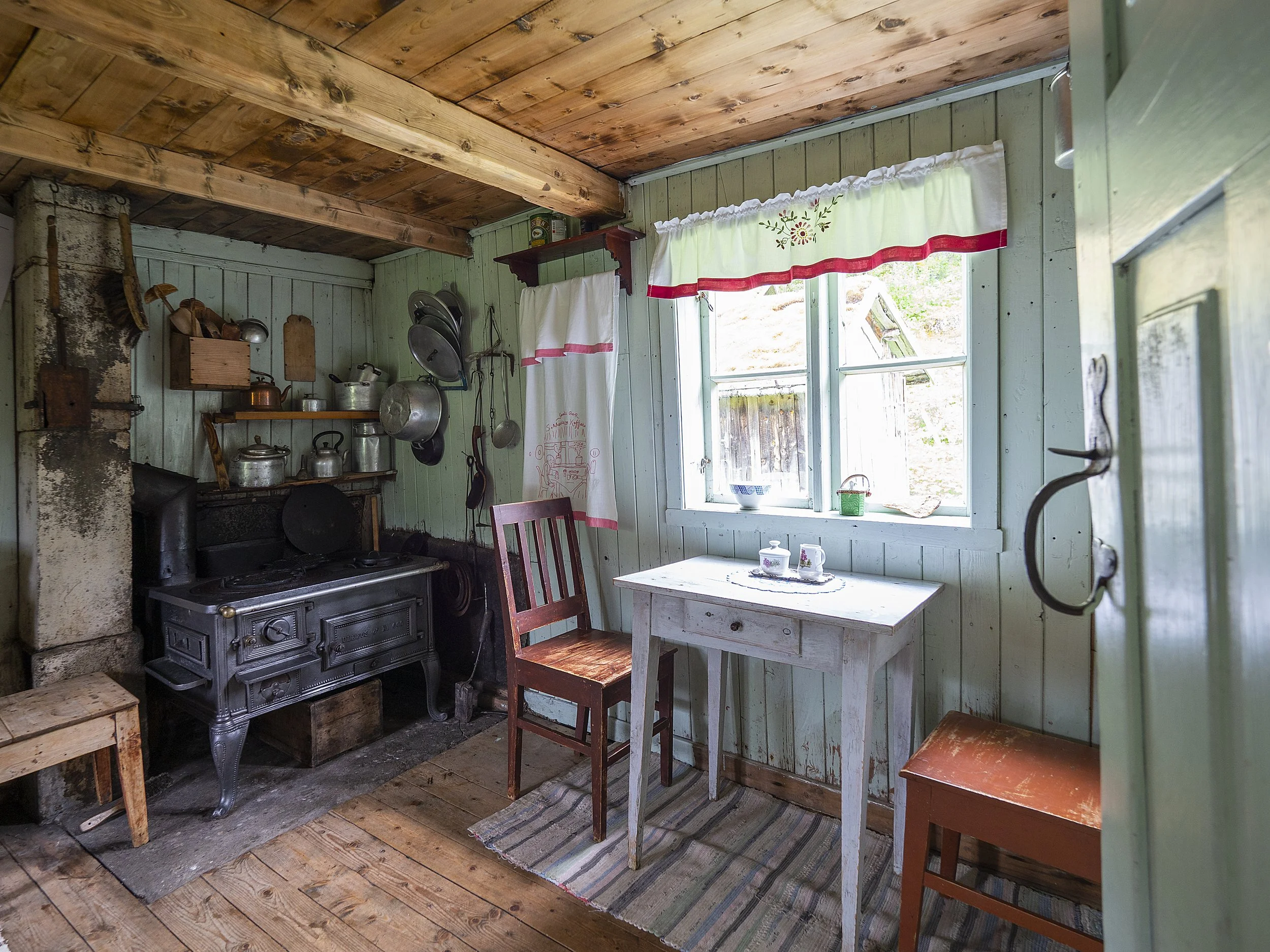
Since the four siblings had no direct heirs, the farm was never modernized. With the exception of restoration work, the old houses stand in the same way as they did when the people lived here. The furnishings and tools are the same. Time has stood still here, so to speak, since the last resident, Hans, passed away in 1967.
Visitors are greeted by our skilled museum hosts who show you the houses and tell the exciting story of the people who lived here.
We base ourselves on being a living museum, and often have demonstrations of old crafts and traditional activities.
Opening hours
Crofter's Farm Kjelvik has been open during the summer season of 2026 and will reopen with regular opening hours in the summer of 2027. More information will be available in the spring.
Would you like to visit us in the meantime? You can book a tour even though we don't have fixed opening hours now — read more here.
Practical information
Entrance tickets are purchased upon arrival at the museum. Expected visit time is approx. 1 hour. Photography is permitted without the use of flash.
Prices
Adults NOK 90, students/honors NOK 70.
Children under 18 have free entry.
Groups (min. 10 paying) NOK 70 per person.
Special prices apply for visits outside of regular opening hours.
Facilities
Mini café and museum shop. Slopes that make it an advantage for people with reduced mobility to have an assistant. The houses are not adapted for the disabled. Outhouse at the beginning of the path from the parking lot.
Address
Follow the E6 56 km north of Fauske, and 25 km south of Mørsvikbotn. From the picnic area and parking there is a good footpath to the homestead.
This happens:
The barn
At the barn you will find a charming little café and museum shop. Here we serve good old-fashioned coffee, soft drinks and sweet temptations. On warm summer days you can drink your coffee outside in the yard, but on rainy days it is nice to sit inside.
In the museum shop we sell unique gift items and old-fashioned toys. The shop focuses on sustainability. We only sell good quality products, many of which are handmade or locally produced. Many people buy the knitting kit for the famous "Kjelvik mitten" when they visit. This is the pattern for a mitten that was found under one of the houses during the restoration. In the barn there is also a photo exhibition with pictures from the history of the homestead.
Booking
Would you like to book a tour at Crofter's Farm Kjelvik, please contact us in good time. Fill out the form by clicking the button below to request a booking and practical clarifications.


History of the museum
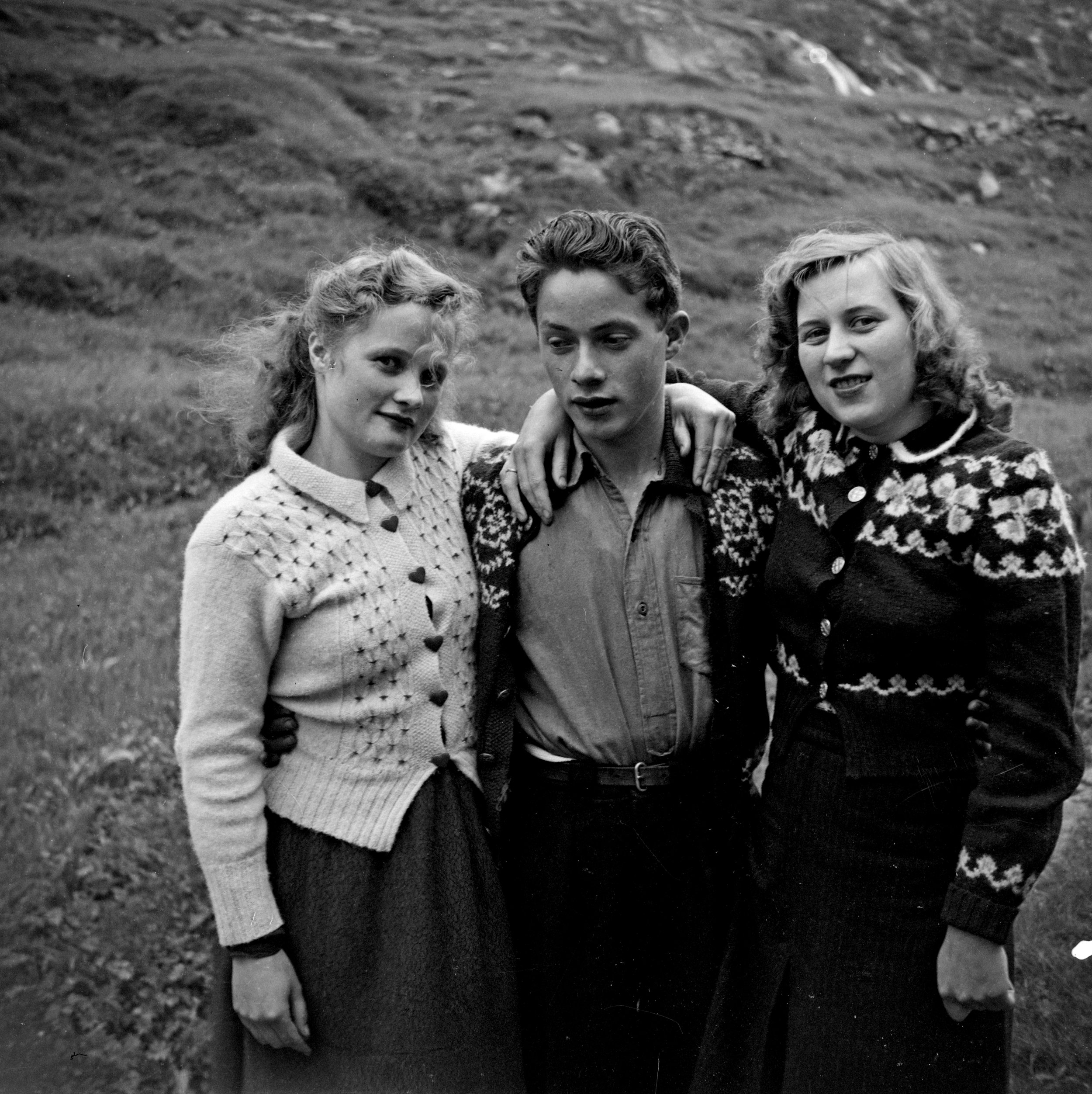
From ancient times, the area here was used as a reindeer grazing area for the reindeer herding Sami who migrated back and forth between Sweden and Norway. Eventually, many of these Sami decided to settle as homesteaders in Norway. The residents here were descendants of these reindeer herding Sami.
The Kjelvik homestead is currently owned by the Sørfold Local History Society, and is a protected Sami cultural monument. The area has also been given the status of Selected Cultural Landscape as a representative of agricultural cultural landscapes with very great biological and cultural-historical values.
From the homestead there is a 2 km long path down to the fjord, which was the old access road from the sea. Before the E6 was built in 1986, this was the only way to get to Kjelvik. If you are good on your feet, it is still possible to walk down the old path. Then you will come down to the fjord and see the remains of the sea houses of the Kjelvik people. The path is now part of the project Fotefar mot Nord.