
From Sápmi to Taiwan: collaboration highlighted in Chronology of Urgencies
A meeting at a seminar during the Insomnia festival in Tromsø was the starting point for a long-term collaboration between artist Hans Ragnar Mathisen and Taiwanese, Tromsø-based artist Lin Pei-Han. Now the collaboration is highlighted in connection with the exhibition Chronology of Urgencies at the City Museum in Bodø , which shows works by Mathisen from the Riddu Duottar Museum's (RDM) collection.
The exhibition presents a chronological "timeline" of Mathisen's work from the early 1970s to the present day, including more recent collaborations with Lin Pei-Han. The artistry is placed in the context of the struggle for indigenous rights, and the exhibition invites the audience to reflect on Sami cultural heritage and Sami art today. But for both Mathisen and Pei-Han, this track began long before the works appeared on the wall.
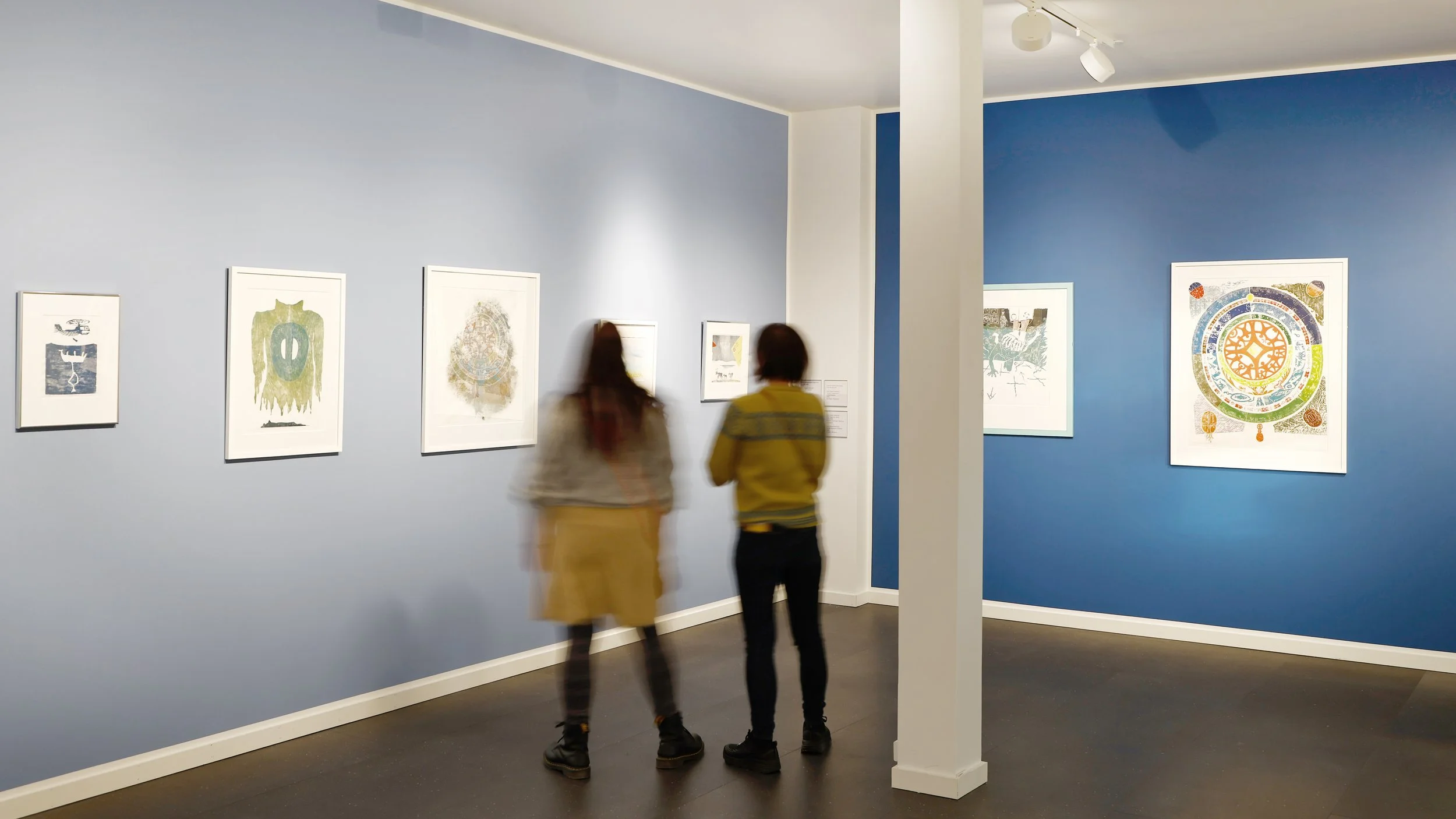
From the exhibition "Chronology and Urgencies", City Museum in Bodø Photo: Marta Anna Løvberg.
A meeting in Tromsø was the start
Lin Pei-Han says that the collaboration took shape when she, as a student at the Academy of Fine Arts in Tromsø, participated in a seminar on decolonization.
– I approached Hans Ragnar afterwards and asked if we could talk more about his experience as a Sami artist in Norway. I come from Taiwan, which has a long colonial history, so I recognized some of the tensions, she says.
Mathisen responded with a surprise: He himself had been to Taiwan before.
– My happiest time in life was when I worked in Taiwan for the first time, says Mathisen, dating the visit back to the 1970s.
The collaboration developed through conversations, interviews and art projects. Pei-Han interviewed Mathisen for her master's thesis, and describes how the collaboration also influenced the choice of materials and artistic direction.
She highlights a project in which she 3D-printed a fragile, porcelain-based sculpture inspired by Sami shoes, a conscious choice that challenged the desire for the monumental and "lasting."
– I had a very strong need to make something large and in metal, something that would be visible and last forever. But through our conversations, it became more important to think more regeneratively and ecologically, she says.
The collaboration was later strengthened through an exchange related to an artist scholarship, where Pei-Han was given a role as an assistant and eventually something more.
“She officially became my assistant with the scholarship,” says Mathisen. “She helped me tremendously, especially with applications and paperwork. I want to spend as much time as possible on art.”
Pei-Han also points out how such titles can make power relations visible.
“I felt like I was doing much more than an assistant role. I often ended up being both producer and project manager. But the title could make people automatically place me ‘below,’” she said, pointing out how gender, age, and status could affect how the collaboration was perceived from the outside.
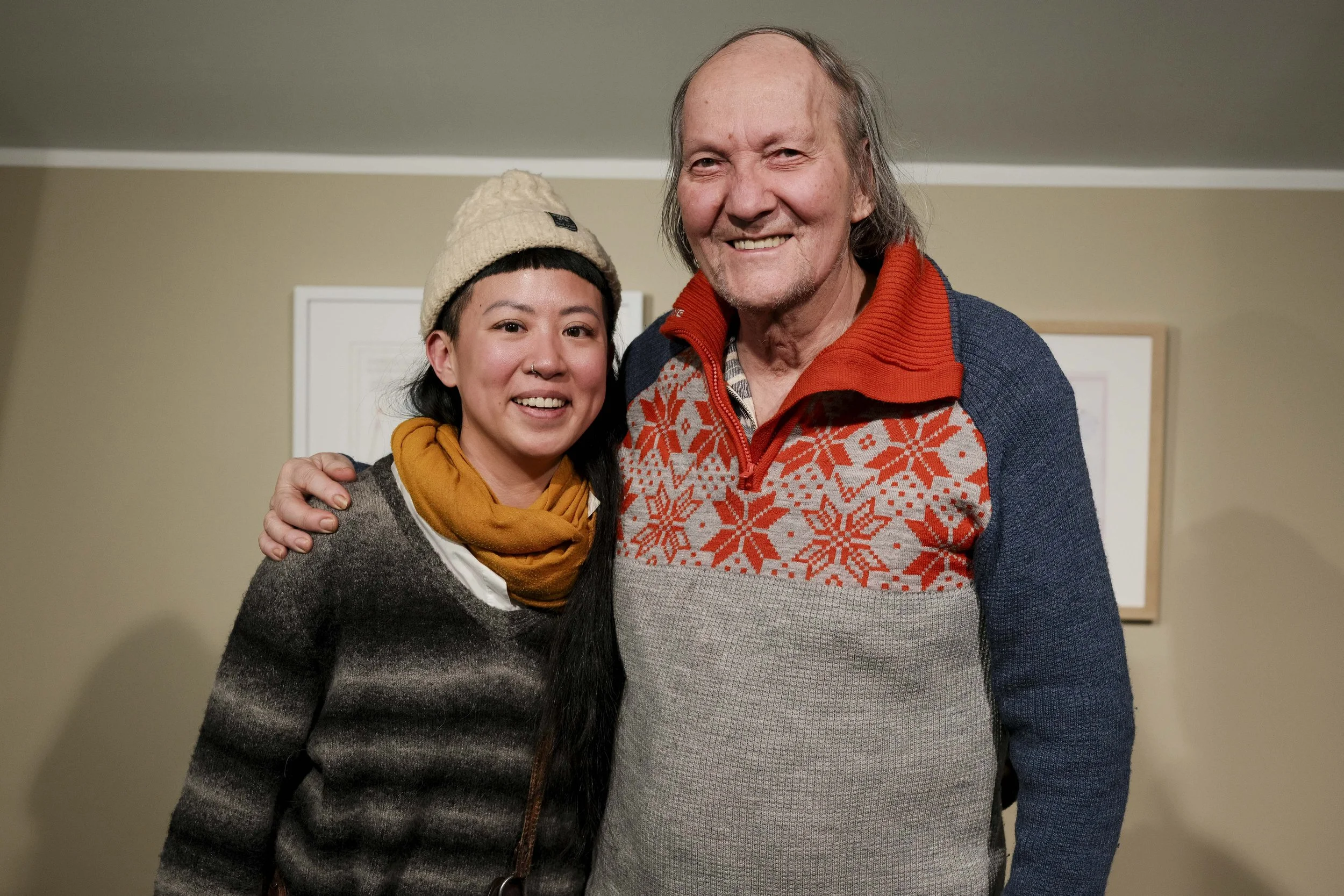
Lin Pei-Han and Ragnar Mathisen at the exhibition opening on February 7th at the City Museum in Bodø Photo: Dan Mariner.
When identity creates friction and understanding
Both also describe that the collaboration has involved friction, particularly related to identity and language. Pei-Han tells of a situation where she introduced Mathisen as “from Norway,” which created a clear reaction.
– He said: “No, I'm not from Norway,” she says, describing how they eventually realized that they had hit each other's sore spots from different historical experiences.
Mathisen elaborates on the difference between citizenship and ethnicity:
– I used to say: I am a Norwegian citizen, but ethnically I am not Norwegian. I am Sami, he says.
The conversation between the two also highlights the working space surrounding the exhibition: an environment characterized by many languages and different experiences.
– I like the vibe. I can speak Chinese, Norwegian and English, and then you hear Sami, Lithuanian, Polish, English here at the museum. I am inspired by the meeting of many perspectives, says Pei-Han.
Mathisen summarizes the collaboration with a clear priority:
– The most important thing for me is the present. What I do now is more important than what I have done and what I will do, he says.
Film and map: multiple entrances to Mathisen's work
In addition to Mathisen's work, Chronology of Urgencies includes Lin Pei-Han's thesis film, which is part of the exhibition's newer track of collaboration and conversation between Taiwan and Sápmi.
The exhibition also features map reproductions based on Mathisen’s map material, curated by guest curator Mengyao Xia, a PhD fellow in social design at Kyushu University in Japan. Xia describes the work as her first practical curatorial experience in a physical exhibition space, and points to the language and place names in the maps as an entry point to questions of identity and marginalization.
Also included is the film The Cartographer by fellow artist Marek Ranis. The film spotlights Mathisen's long-standing work with maps of Sami areas, while also pointing to political questions about landscape, language, belonging and indigenous peoples' rights.
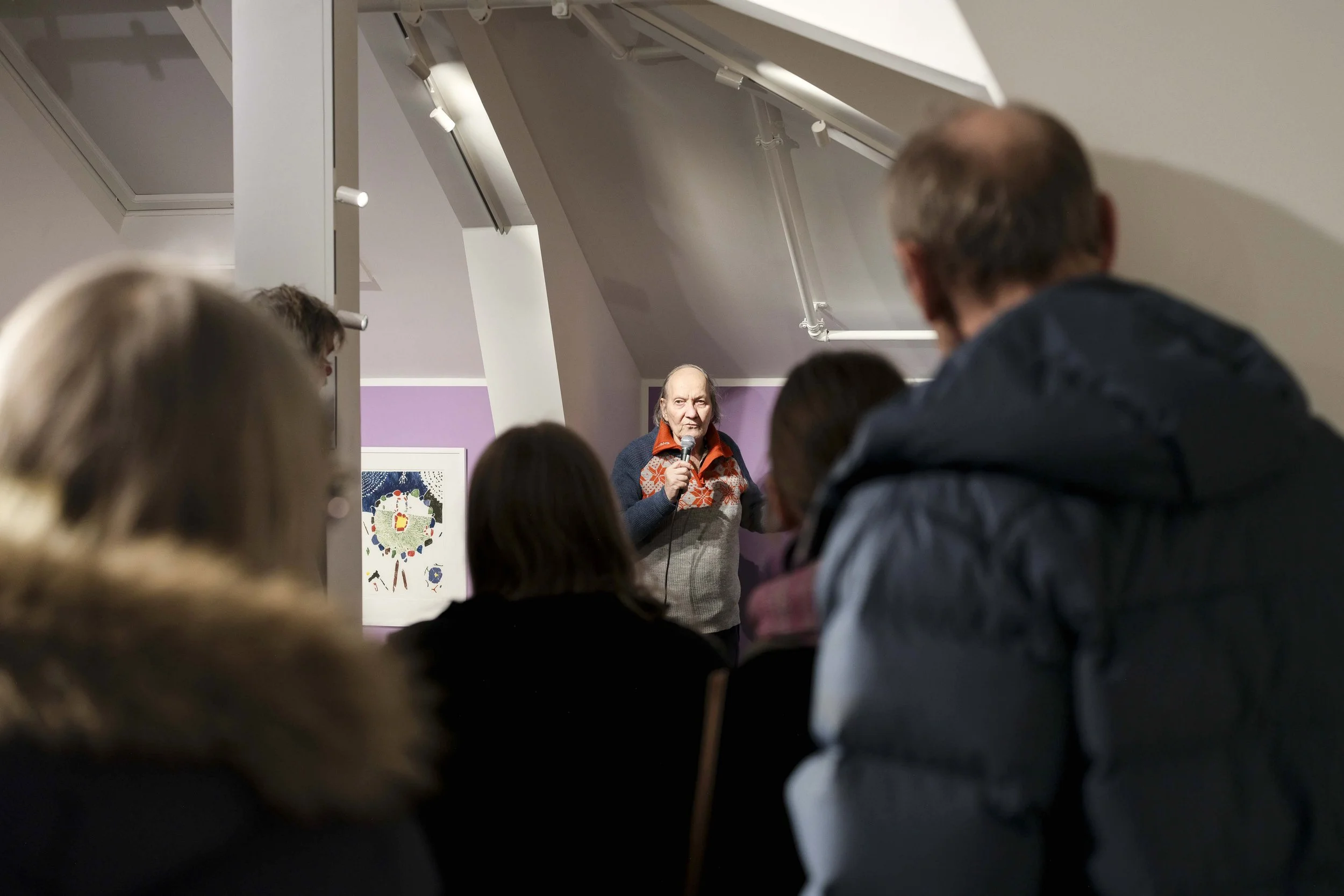
Hans Ragnar Mathisen guided the audience through his exhibition during the opening. Photo: Dan Mariner.
