
How we accept donations for the collection
Every year receives Nordlandsmuseet inquiries from people who want to donate objects, photographs or other objects to our collections. Such gifts are valuable, they can fill gaps in the story we tell, or supplement what we already have.
Here is how the process works, from the first inquiry until the object is registered in the collection.
Step 1 — Submit information
The first step is to fill out the form at nordlandsmuseet . Here you can describe the object and upload photos. The more information you provide, the easier it is for us to make a good assessment.
Step 2 — Assessment of the collection team
The collection team in Nordlandsmuseet meets once every two months to review incoming gift offers. They evaluate each object against the museum's collection plan and look at, among other things, historical value, whether we already have similar objects in the collection, and whether the object requires special conservation or storage.
Step 3 — Feedback and agreement
After the assessment, the offeror is notified of the decision. If the object is accepted, an agreement is signed that provides Nordlandsmuseet full legal control over the object. We only accept gifts from the legal owner, or persons with authority from the legal owner.
Step 4 — Receiving the object
The object is accessioned. This means that the object is registered in the museum's systems and given a unique number. The object is then photographed and the known history of the object is also registered in our systems. The object is then cleaned and, if necessary, conserved.
Step 5 — Making it available
Information about the object is then published on Digitalt Museum and made available for relevant exhibitions.
Why don't we show everything we have?
Nordlandsmuseet displays objects in both permanent and temporary exhibitions, but the public only gets to see a small part of the collections. The reason is complex.
The collections are too large to exhibit everything at once. Exhibitions are also stories with a theme. The museum selects objects that fit the individual story, and the rest are preserved for other contexts. In addition, many objects cannot withstand poor light and wear. Controlled storage protects them better than open exhibitions.
Finally, the collections are available to researchers and students. The museum preserves the breadth of history, not just what is exhibited. The exhibitions are the tip of the iceberg. The rest of the collections lie ready to make sense in new contexts.
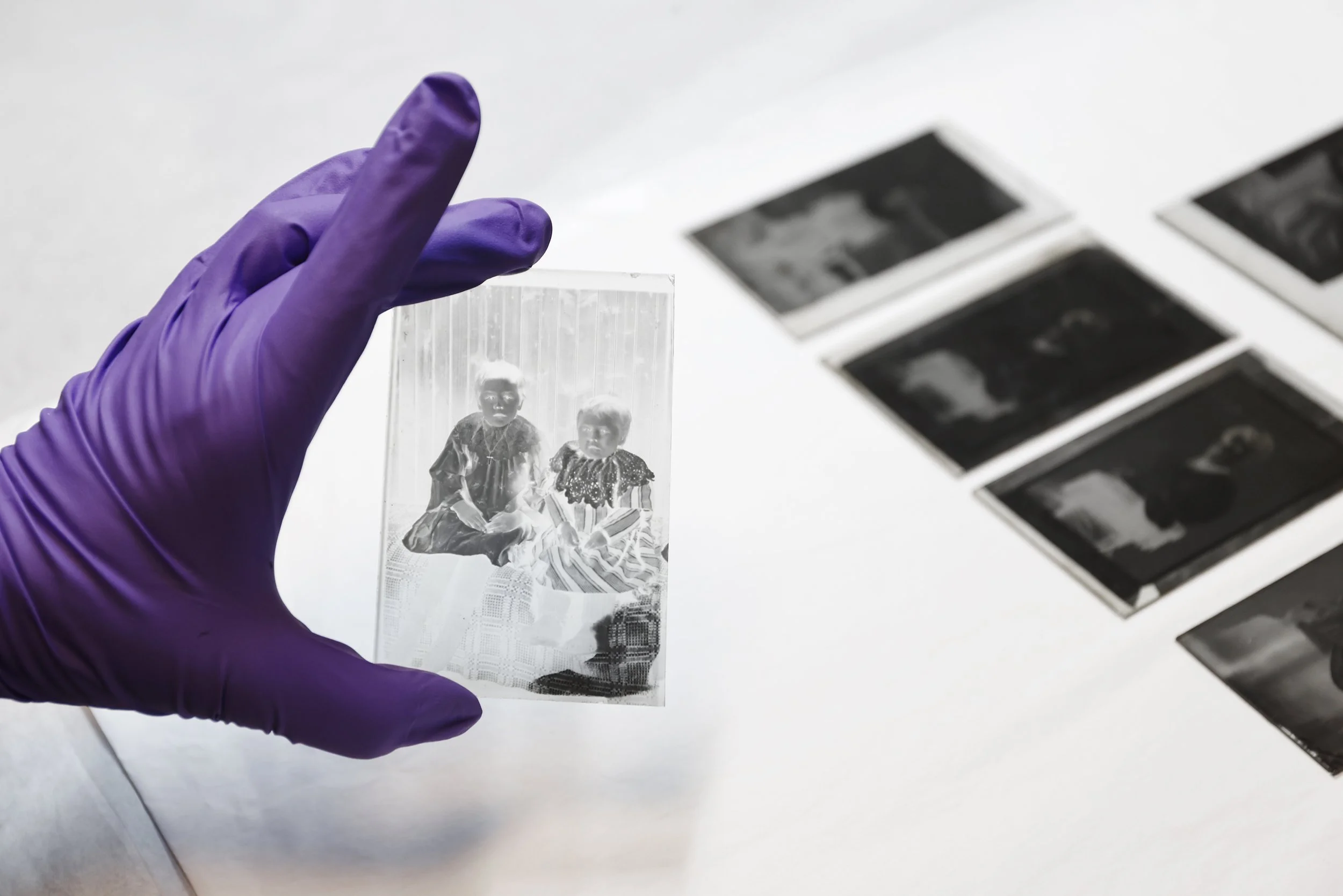
130 glass plates from Fauske , an example of a gift to the collection
In the spring of 2026, received Nordlandsmuseet a gift from Fauske Family History Association. The gift consisted of 130 glass plates with photographs taken by Hans J. Kosmo (1852–1914) from Djupos in Velnesfjord, in addition to digital copies of the collection. The images show portraits, landscapes and buildings from Fauske area.
Hans J. Kosmo photographed at a time when the glass plate was the most common medium for photographers. The technique became dominant from the 1860s and was used until around 1900.
A glass plate was coated with a light-sensitive chemical emulsion and inserted into the camera instead of film. The actual exposure took time — the subject had to remain perfectly still for several seconds, sometimes longer, depending on the lighting conditions. That is why portrait photographs from this period often show stiff poses and serious facial expressions. Smiling for an extended period of time was not easy.
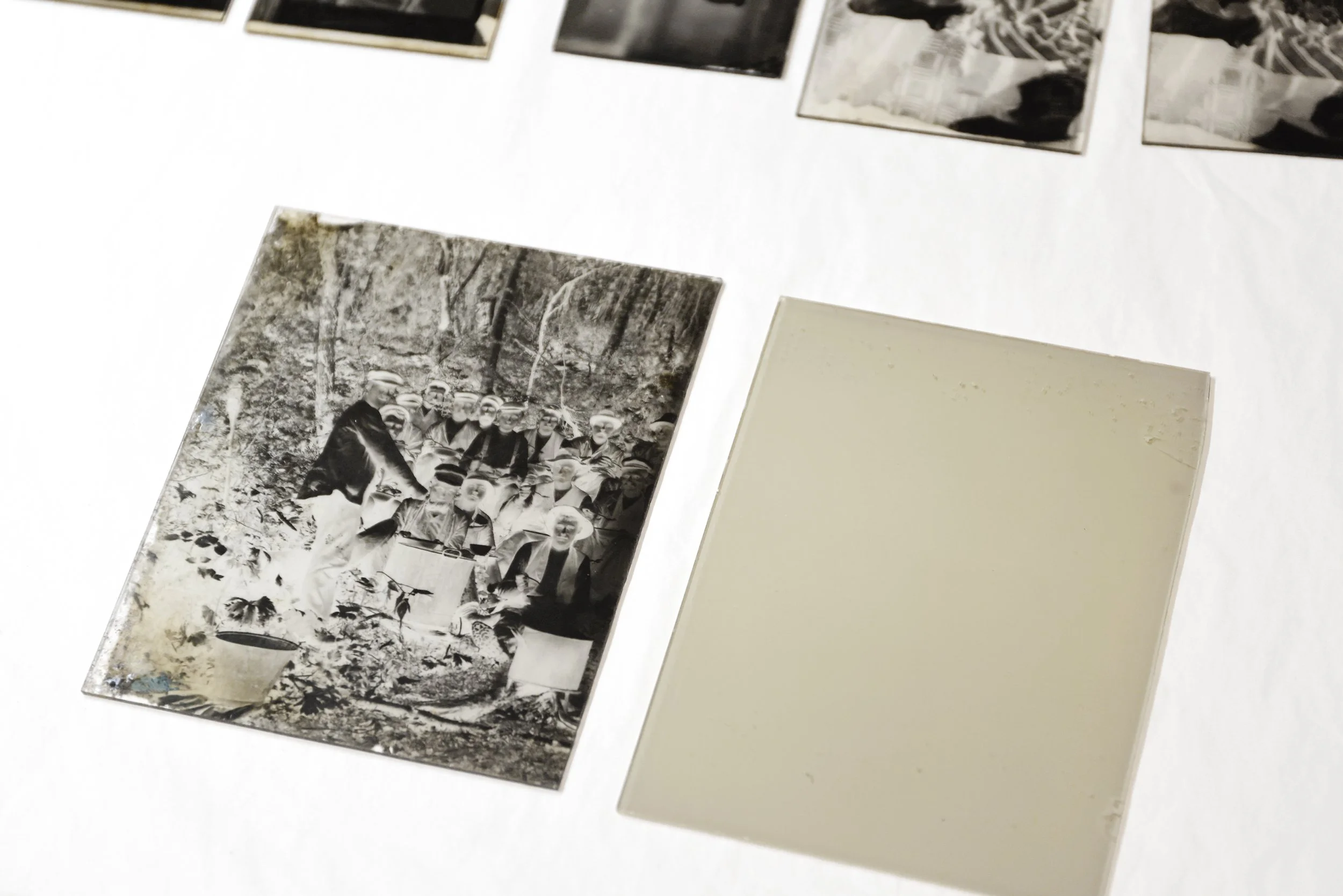
The exposure time when photographing on a glass plate was long. How long depended primarily on how much light hit the plate.
In the early 19th century, it could take up to eight hours to take a single photograph. With the wet plate technique, which was common from 1850 to 1880, the photograph took between 15 and 60 seconds in direct sunlight. The subject had to sit perfectly still. Towards the end of the 19th century, dry plates with faster emulsions were introduced, and exposure times were shortened to seconds or fractions of a second.
Three factors determined how long it took to take the picture: the lighting conditions, the chemical mixture on the plate, and the size of the aperture of the camera lens.
After exposure, the plate had to be chemically developed in the darkroom. The entire process required equipment, chemical knowledge, and precision. The plates were heavy and fragile, and a mistake in development could completely ruin the image.
The result was nevertheless a negative on glass with a richness of detail that the paper photographs of the time could not match — and which has survived for over 100 years.
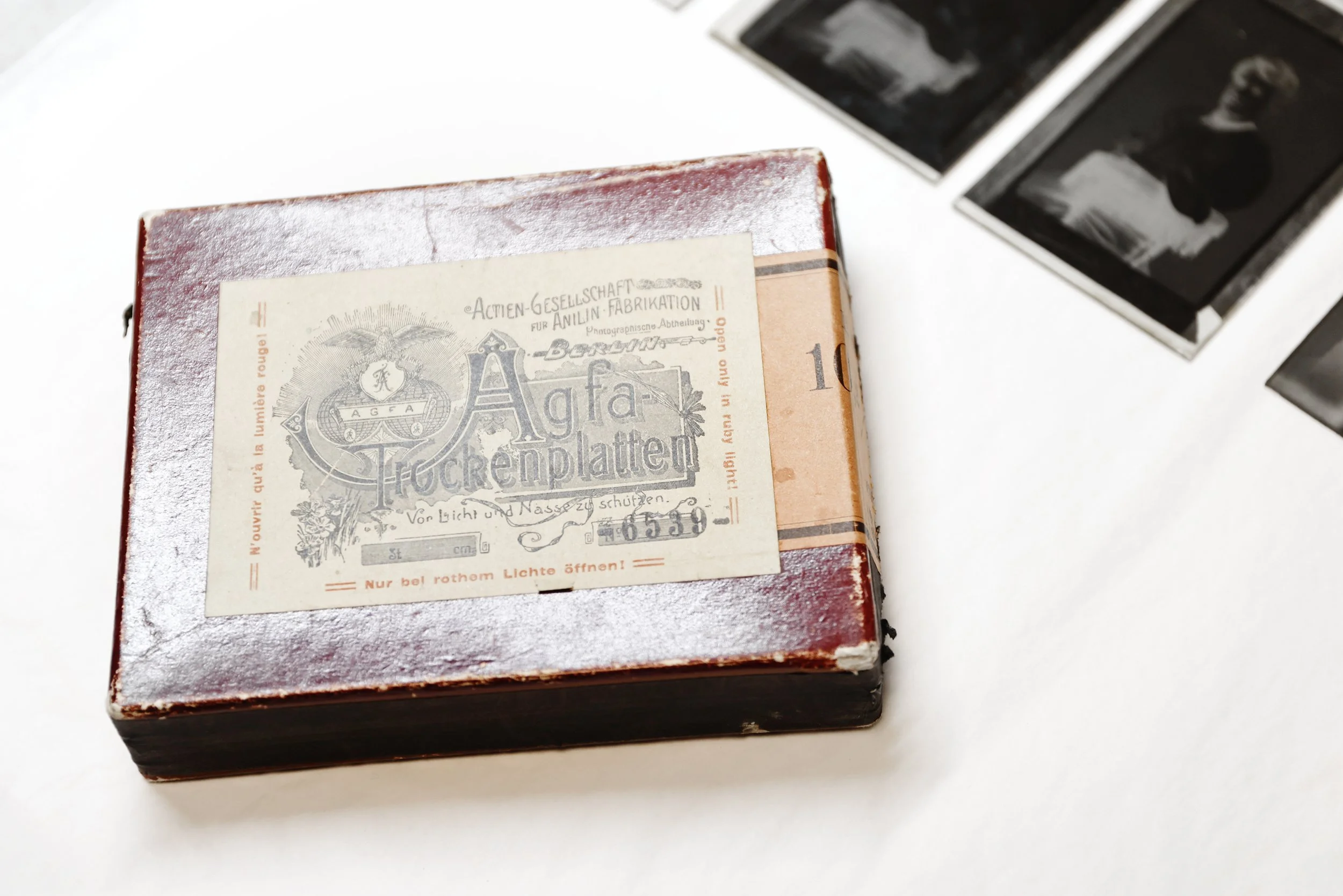
Agfa dry plates
Agfa (Aktien-Gesellschaft für Anilin-Fabrikation) was founded in Berlin in 1867 and began producing photographic plates, developers and film rolls towards the end of the 19th century. "Trockenplatten" is German for "dry plates" — that is, gelatin dry plates, which were the dominant photographic technique from the 1880s until around 1920, when roll film gradually took over.
The glass plates from Kosmo are now part of the Nordlandsmuseet's picture collection. The plates have been accessioned and will be photographed. They will then be registered in the museum's database. The plates themselves are stored in the museum's photo archive at low temperature, which means they will last longer.
Although the plates may deteriorate over time, the museum preserves them anyway. New technology or better knowledge in the future may make it possible to recreate the images in new ways.
Finally, the images are made available through the Digital Museum and in exhibitions when relevant.
