
M/B Teisten — a motorized eight-ring with an important history
In the Nordlandsmuseet collection we find M/B Teisten, a motorized eight-ring and a unique example of the transition from traditional northern Norwegian boatbuilding to modern motorized fishing. She is physical evidence of one of the most dramatic changes in Norwegian fishing history.

A boat between two worlds
The Teisten is a hybrid vessel. She is the link between the åttringen, the traditional rowing and sailing boat, and the sjarken, the modern motorized fishing vessel. The åttringen is the largest type of northern Norwegian boat, with eight or more oars and sails, and has roots in over 1000 years of clinker boat building techniques. When engines came along, the boats had to adapt. The Teisten is the result of this adaptation.
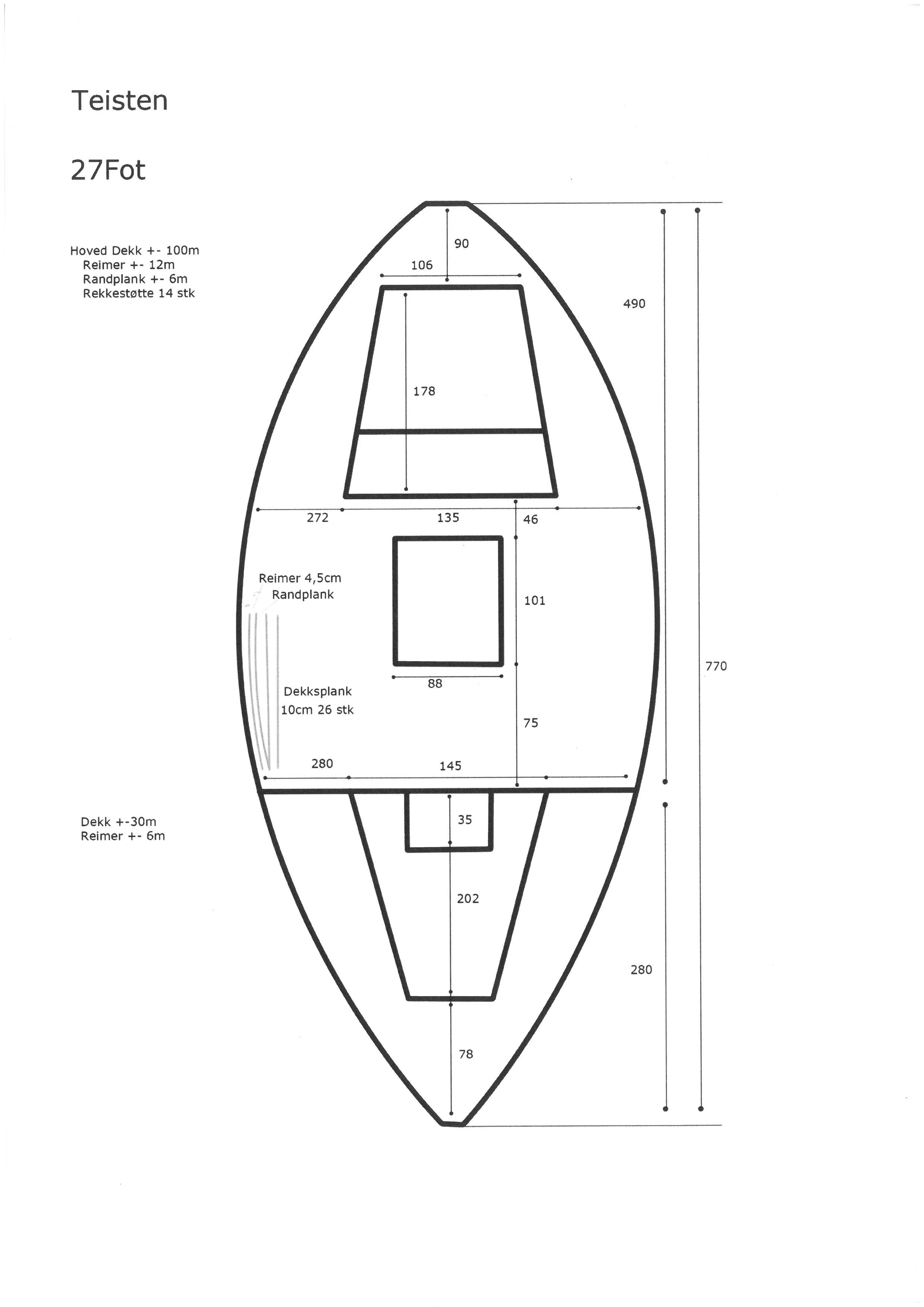
She is taller, wider and shorter than a traditional figure-eight, measuring 27 feet. She has a full deck and wheelhouse instead of an open deck, and no oars, but has retained the sail. The engine was used not only for propulsion, but also as an aid during fishing. The exhaust pipe went through the wheelhouse and provided extra heat, which was welcome in the cold waters along the Norwegian coast.
Built for fishing
The main hull of the Teisten was built by Per Jacobsen at Bjerka in Rana in 1938. The deck, masts and superstructure were made at Bolga in Meløy by the first owner, fisherman Konrad Lorentsen. After Konrad, his sons Sigfrid and Arthur took over the boat, and until 1972 she was in active use as a fishing boat. Throughout these years she was kept running as a working vessel: parts were repaired, improved and replaced, including the deck, wheelhouse and engine. Her first engine, Liten Rapp, proved to be too weak, and was eventually replaced with Gideon and then with Sabb.
This was a typical way of building and operating boats along the coast. The hull was delivered ready-made, while the fisherman himself assembled the deck and superstructure according to his own needs. Local, homemade and tailor-made.
From sea to land
In 1992, Teisten was purchased by Meløy municipality and the local history club. Boatbuilder Børge Isaksen from Sleneset carried out major repairs in 1995 and 1996, and from 1996 to 2010 she was in operation as a tourist boat. The history club managed her on behalf of Meløy municipality , and from 2008 also for Nordlandsmuseet .
Maintenance did not keep up with wear and tear. Infrequent use and inadequate covering in the winter resulted in extensive rot damage above the waterline. When Teisten was lifted out of the water and moved from Ørnes to Rognan in 2012, further damage to the hull was discovered.
In 2013, full ownership was transferred to Nordlandsmuseet .
Condition reports from boat builder Kai Linde in 2013 and the North Norwegian Vessel Protection Center in 2015 show that the hull, subframe and engine foundation are largely original, while the rest of the vessel was repaired or replaced during her working life and during the restoration in the 1990s.
In September 2022, Teisten was moved to Kai Linde's workshop. Visual assessments and laboratory analyses of wood samples revealed infestation by four types of fungi and mold at all sampling locations, a common finding for wood materials exposed to high humidity. Most of the rotten wood was removed and replaced with newly made wood parts, especially in strategic locations to keep the structure stable.
Today, the Teisten is stored on land in Rognan, awaiting decisions about her future.
Why Theist is Important
The Teisten is more than just an old boat. She represents an entire era in Norwegian fishing history. Until the early 19th century, fishing was conducted from open boats with traditional gear. At the beginning of the 20th century, boats became increasingly motorized, making it possible to fish larger quantities with smaller crews. This technological revolution changed Norwegian coastal culture forever, and the Teisten is a concrete and preserved example of this transition.
She was the last of her type in use in Meløy The local community organized around her, raised funds and created a history team to secure her future. The local interest and desire to preserve Theisten still lives on.
